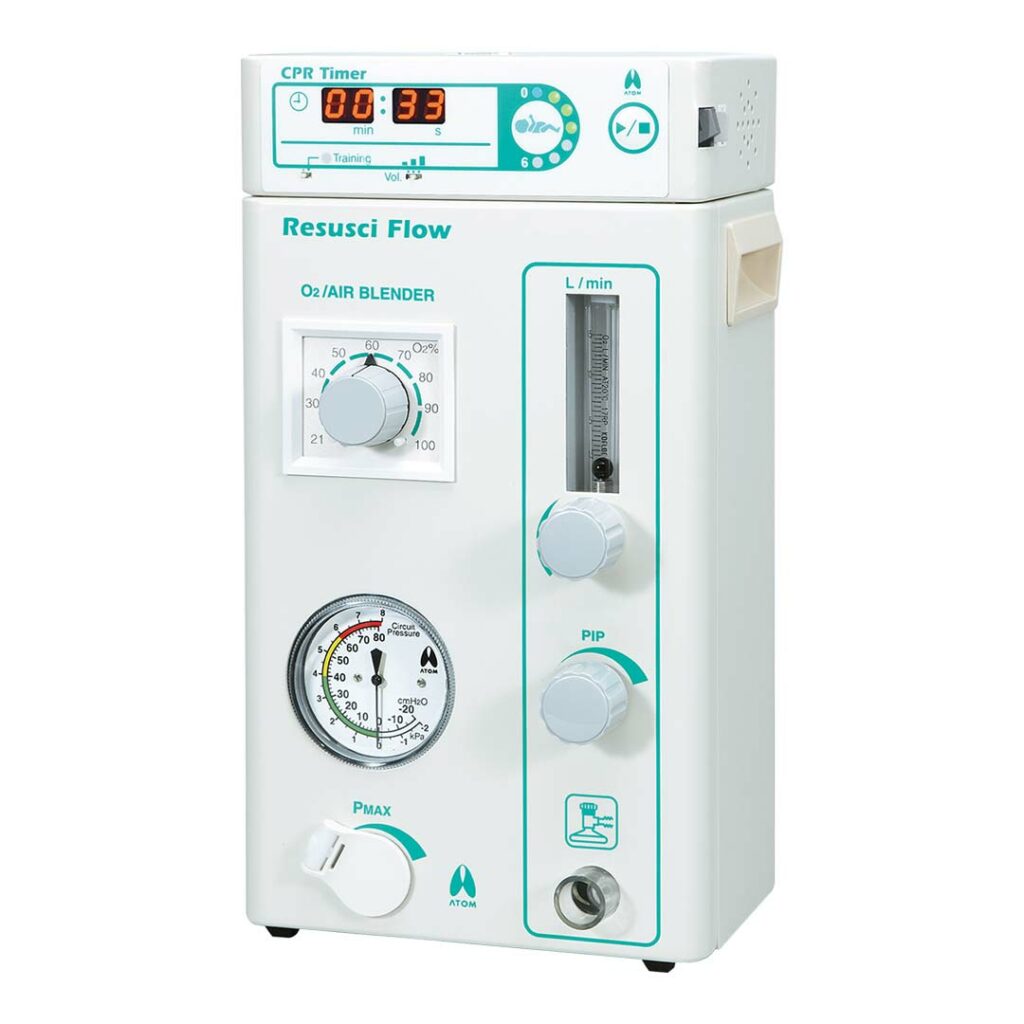
Resusci flow with Blender
Precision ventilation with integrated oxygen control.
Neonatal asphyxia occurs in approximately 10% of all births, including low‑risk deliveries. In these critical moments, the ability to deliver controlled ventilation with precisely adjusted oxygen concentrations can significantly influence outcomes. Resusci Flow with Blender builds upon the proven T‑piece resuscitation platform by integrating an oxygen blender, allowing clinicians to deliver a customised air‑oxygen mixture tailored to the infant’s condition.
User‑friendly operation – seamless oxygen control at your fingertips
Resuscitation requires focus on the patient, not on complex equipment. Resusci Flow with Blender is designed to keep the operator’s attention where it belongs.
One‑touch blender adjustment
The integrated blender allows the clinician to select the desired oxygen concentration rapidly and without diverting attention from the infant.
T‑Flow valve for breath‑by‑breath control
The T-Piece direct and tactile control provides immediate responsiveness to the infant’s respiratory effort, allowing for synchronised ventilation that respects the newborn’s own breathing rhythm when present.
Integrated manometer for pressure awareness
The built‑in pressure gauge provides continuous, real‑time feedback of airway pressures, allowing the operator to confirm that the selected pressures are being delivered consistently and to make adjustments as needed.
Support for targeted saturation strategies
The ability to fine‑tune oxygen concentration allows the resuscitation team to align delivery with SpO₂ monitoring, gradually adjusting FiO₂ to achieve the target saturation ranges recommended by neonatal resuscitation algorithms.
Alarm function
The unit incorporates an alarm function that activates when the pressure difference between oxygen and air supplies exceeds 138 kPa, alerting the team to potential gas supply issues that could compromise resuscitation quality.
Transition from resuscitation to ongoing support
Once the infant is stabilised, the same device can continue to provide ventilatory support with precisely controlled oxygen during transport to the NICU or during the initial period of intensive care. This continuity eliminates the need to switch between different ventilation systems, reducing interruptions in care.