History
In 1938, the company that would become today ATOM MEDICAL CORPORATION, began a journey that soon earned the trust of neonatologists around the world.
During the 1980s, we helped redefine the limit of viability from 24 to 22 weeks of gestation. In 2019, an ATOM incubator carried a 258gram baby boy to safety, another step forward in saving tiny lives.
Corporate history
History of neonatal care in Japan and ATOM MEDICAL product
1930
1938 “Chiyoda Trading Company” was established .

1940
1948 “Chiyoda Medical Equipment Inc.” was established at Masago-cho, Bunkyo-ku, Tokyo.
1950
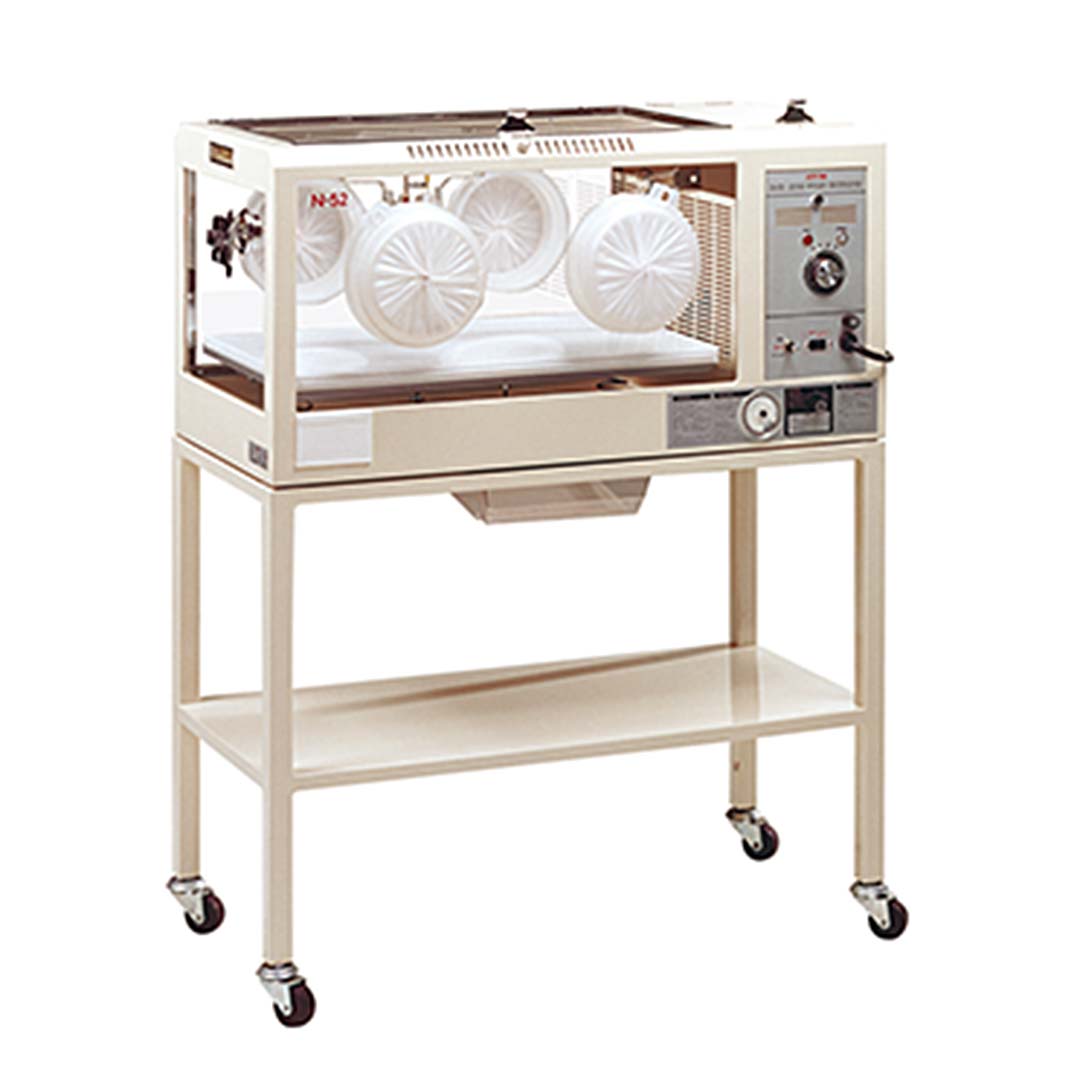
1952 ATOM Infant Incubator N-52
In post-World War II Japan, deteriorating nutrition and sanitation led to increased rates of low birth weight and frail infants. By 1951, the neonatal mortality rate reached 27.5 per 1,000 births—one of the highest among World Health Organization (WHO) member states. This prompted the WHO to propose “Measures to Reduce Neonatal Mortality,” making a response an urgent priority for Japan.Responding to this pressing need of the times, Japan’s first domestically produced modern incubator, the ATOM Infant Incubator N-52” was developed.
1955 ATOM Infant Incubator V-55
1960
1964 Production commenced at the Urawa Factory.

1970
1970 The company’s corporate name was changed to ATOM Inc.”
1972~1975 in Japan Increase in the number of NICUs with the spread of Nasal CPAP and artificial ventilators for newborns.
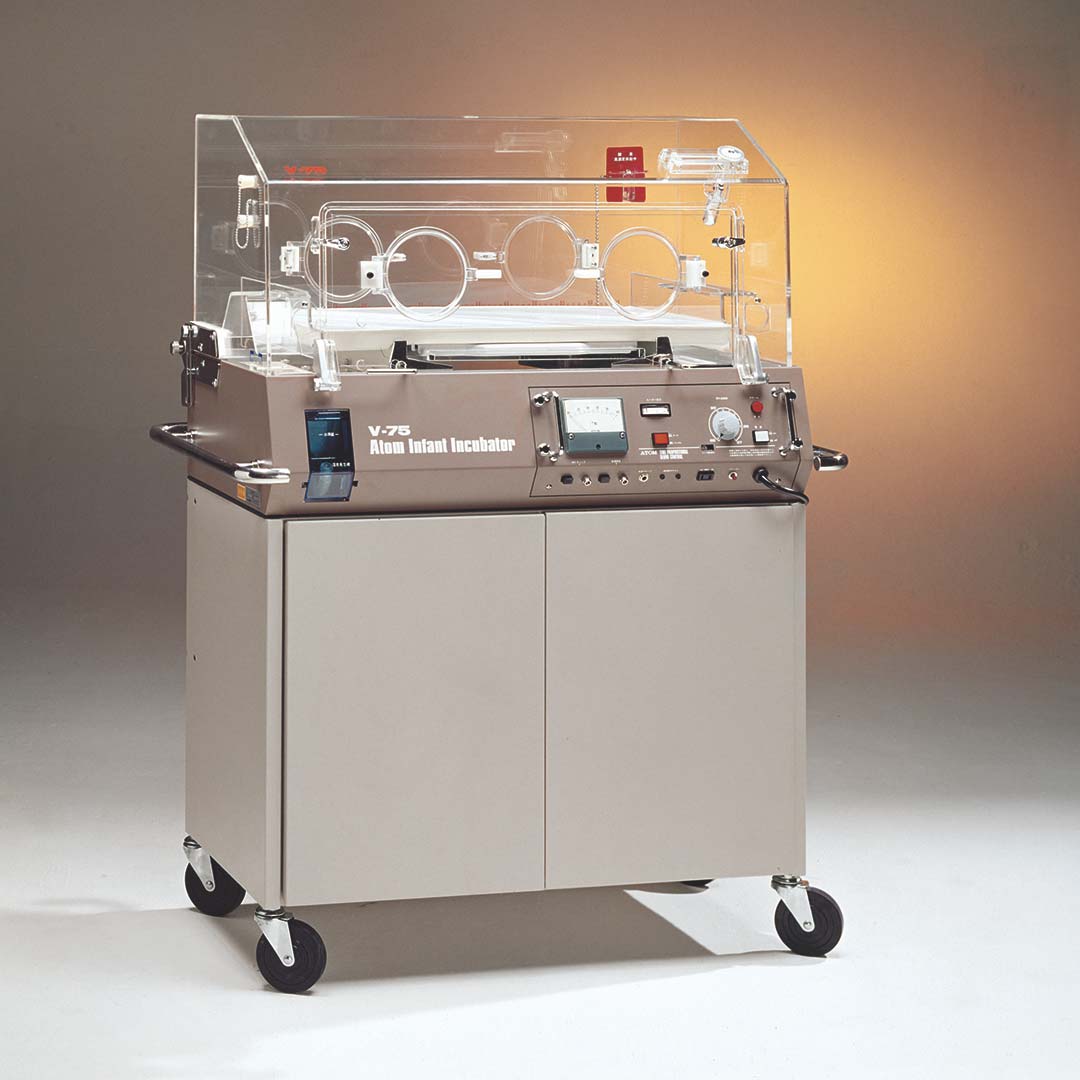
1975 V-75 Atom Infant Incubator
We were the first Japanese manufacturer to improve temperature control by changing from the conventional.
1978 Infant Warmer V-3200
1980
1989 ATOM MEDICAL INTERNATIONAL was established.
1980 ATOM Infant Incubator V-80
1984 in Japan HFO artificial ventilator became common.
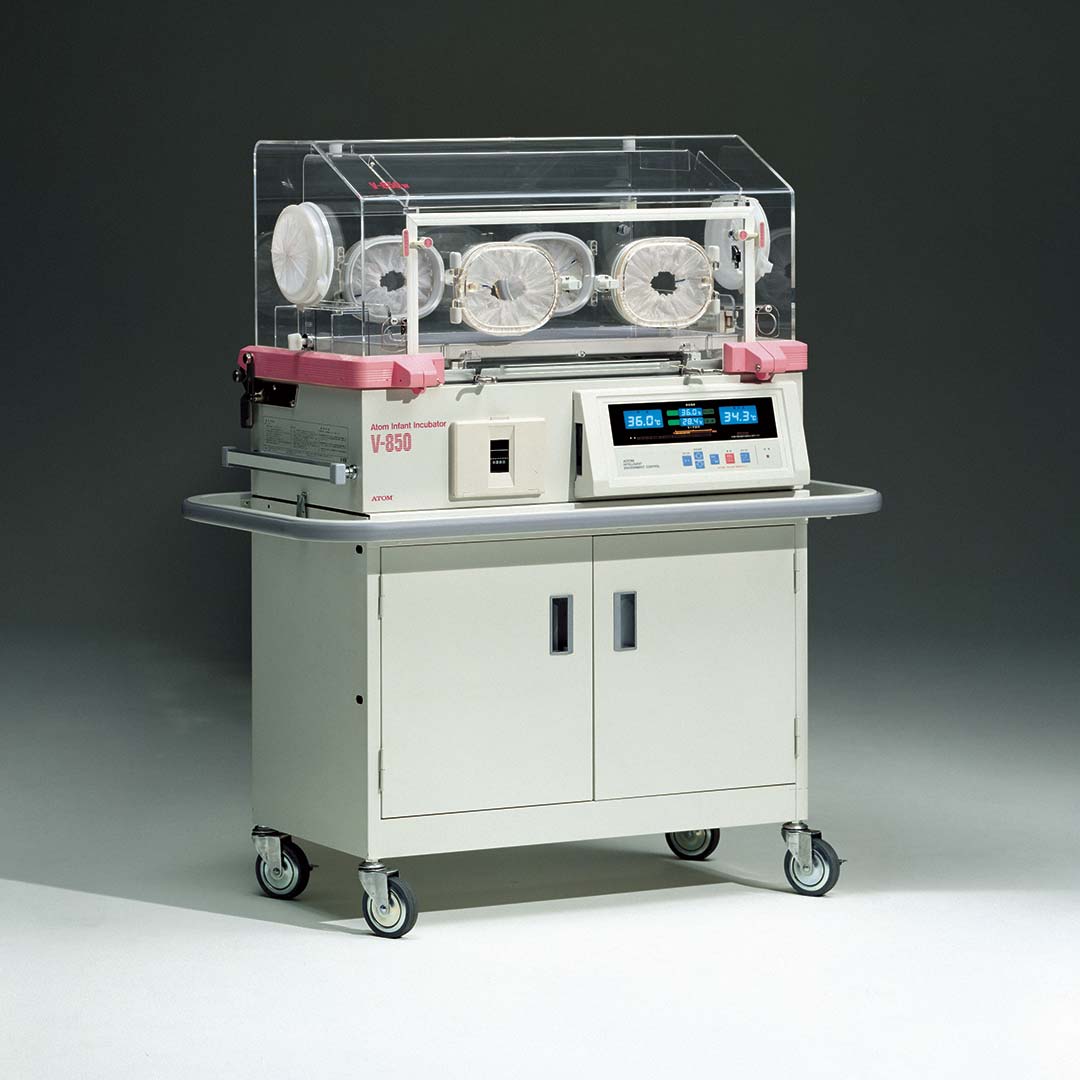
1985 V-850 infant incubator
Equipped with double wall hood and air curtain mechanism.
1987 in Japan Artificial lung surfactant was put into practical use and the neonatal mortality rate improved.
1988 in Japan The number of infant deaths per year per 1,000 live births dropped below 5.0 for the first time in the world.
In 1988, the infant mortality rate in Japan dropped to 4.8/1,000 live births, breaking the 5.0 barrier for the first time in the world. The reduced rate of neonatal deaths, which accounted for approximately half of infant deaths, was considered to have substantially contributed to the decline.
In 1990, US congress committee members participated in a monitoring visit to Japanese hospitals to find out why Japan’s neonatal mortality rate fell below that of the U.S.
Forty years after the WHO proposal was released, Japan’s neonatal care gained world recognition.
1990
1996 The company’s corporate name was changed to “ATOM MEDICAL CORPORATION”.
1990 in Japan 22-week “peri viable pregnancy”.
Following the development of neonatal care, the life-saving rate of premature infants improved. As a result, the “limit of viability” changed from 24 weeks of pregnancy to 22 weeks in 1990 under the Motherhood Protection Law of Japan.
The fewer the number of weeks of pregnancy is, the larger the transepidermal water loss becomes after birth. Demand grew for infant incubators that could maintain a high-humidity environment and that were condensation-resistant to prevent fluid loss.
1996 ATOM Infant Incubator V-2100
1996 in Japan
They launched the perinatal medical care project. The project resulted in the setting up of general and regional perinatal maternal and child medical centers.
We were the first Japanese manufacturer to improve temperature control by changing from the conventional.
1998 V-2100G ATOM Infant Incubator
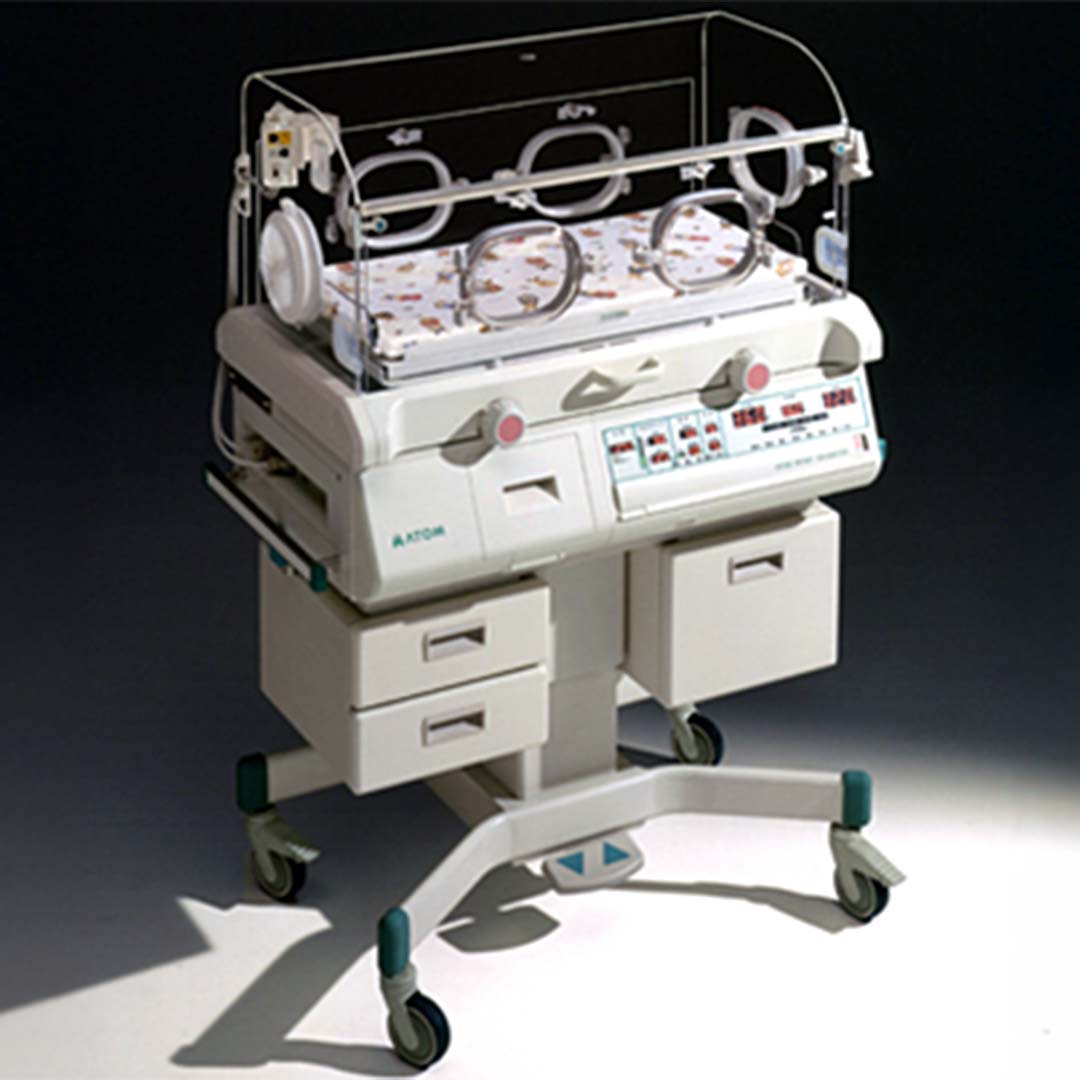
1998 ATOM Infa Warmer V-505
2000
2004 ATOMED CEBU, INC. was established on Cebu Island, Philippines, where ATOM shifted the production of consumables and disposables.

2005 EU office was established in the Netherlands.
2008 EU office was moved to Italy.
2004 ATOM Infant Incubator V-2200
2010
2015 ATOM MEDICAL USA was established.
2010 i series Infant Incubators
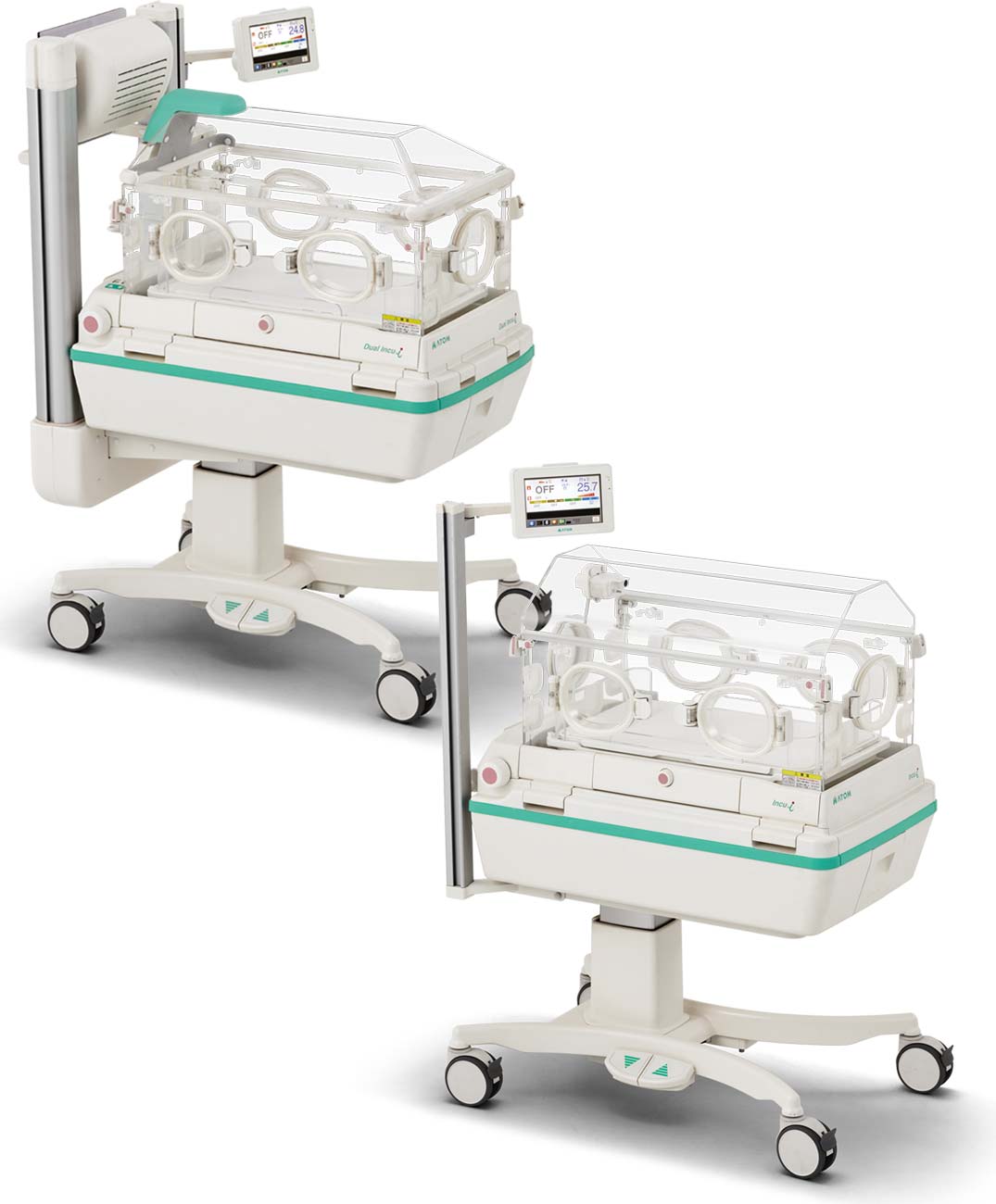
Integration of the functions of infant incubator and warmer.
In 2019, a 258-gram baby boy born at Nagano Children’s Hospital was placed in this infant incubator. Thanks to the hospital’s and his family’s dedicated care, he grew rapidly, reaching over 3,300 grams, and was discharged safely. At the time of his healthy discharge, his birth weight was the “world’s smallest.”
2016 IncuArch(Transport Incubator)
2020
2023 The new head office building was completed.

2026 ATOM MEDICAL EUROPE was established.