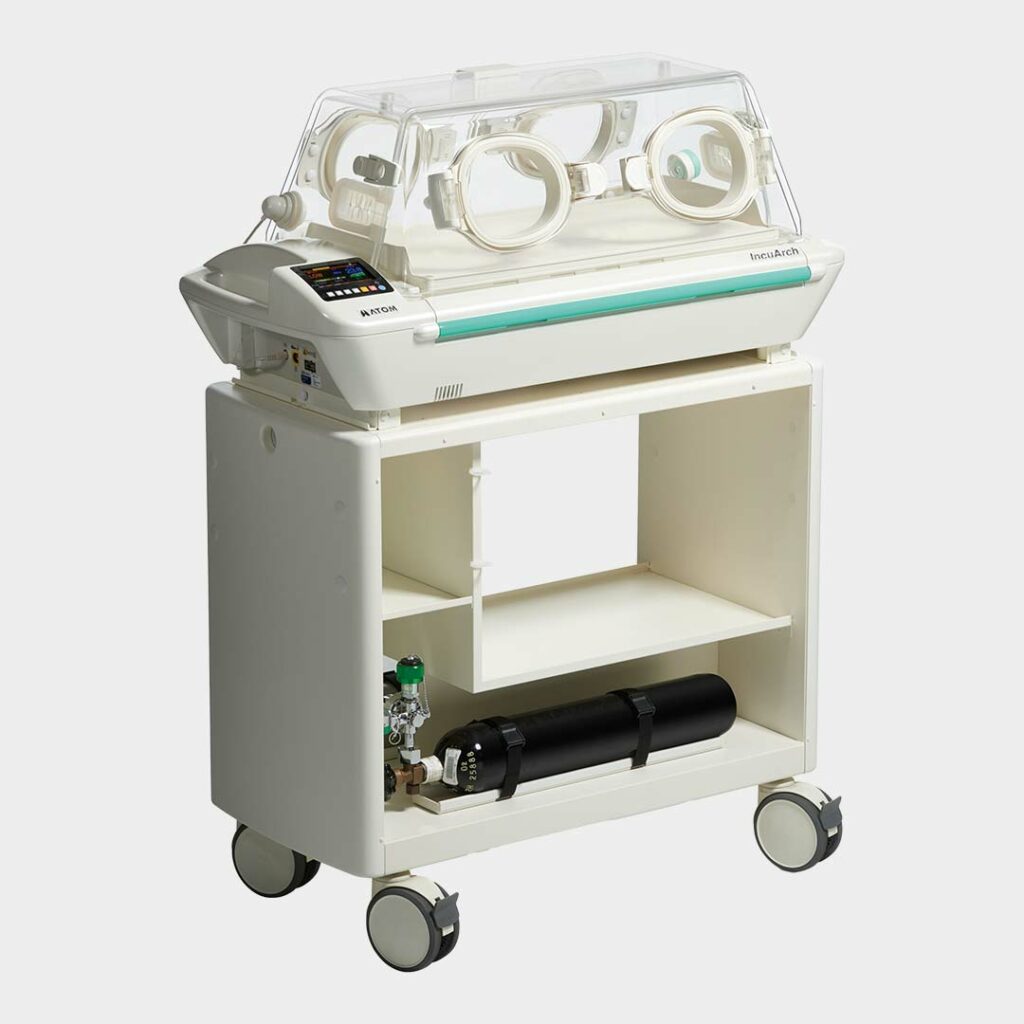
IncuArch
Continuity of care during neonatal transport.
Neonatal transport represents one of the most vulnerable phases in the care of critically ill or preterm infants. The transition between different places exposes the newborn to risks of thermal instability, physiological stress, and interruptions in monitoring. IncuArch has been specifically engineered to address these challenges, providing a transport incubator that maintains a stable therapeutic environment while offering clinicians the visibility, access, and functionality needed to deliver high‑quality care throughout the journey.
Core clinical features
The incubator combines thermal management, patient access, and monitoring capabilities to support uninterrupted care during transfer.
Large operative field with bilateral access
Despite its compact external dimensions, IncuArch maintains the same internal operative field as conventional full‑size incubators. Snap‑open access ports are positioned at both the head and foot ends of the hood, allowing clinicians to reach the infant from either direction.
Optimised hood design for unobstructed observation
The lighting lamp has been minimised in size to eliminate visual obstacles, allowing clinicians to maintain clear line‑of‑sight to the infant at all times. The hood surface has been designed with significantly reduced unevenness, facilitating procedures without the need to reposition the patient or struggle with irregular surfaces.
Strategic placement of the operation panel
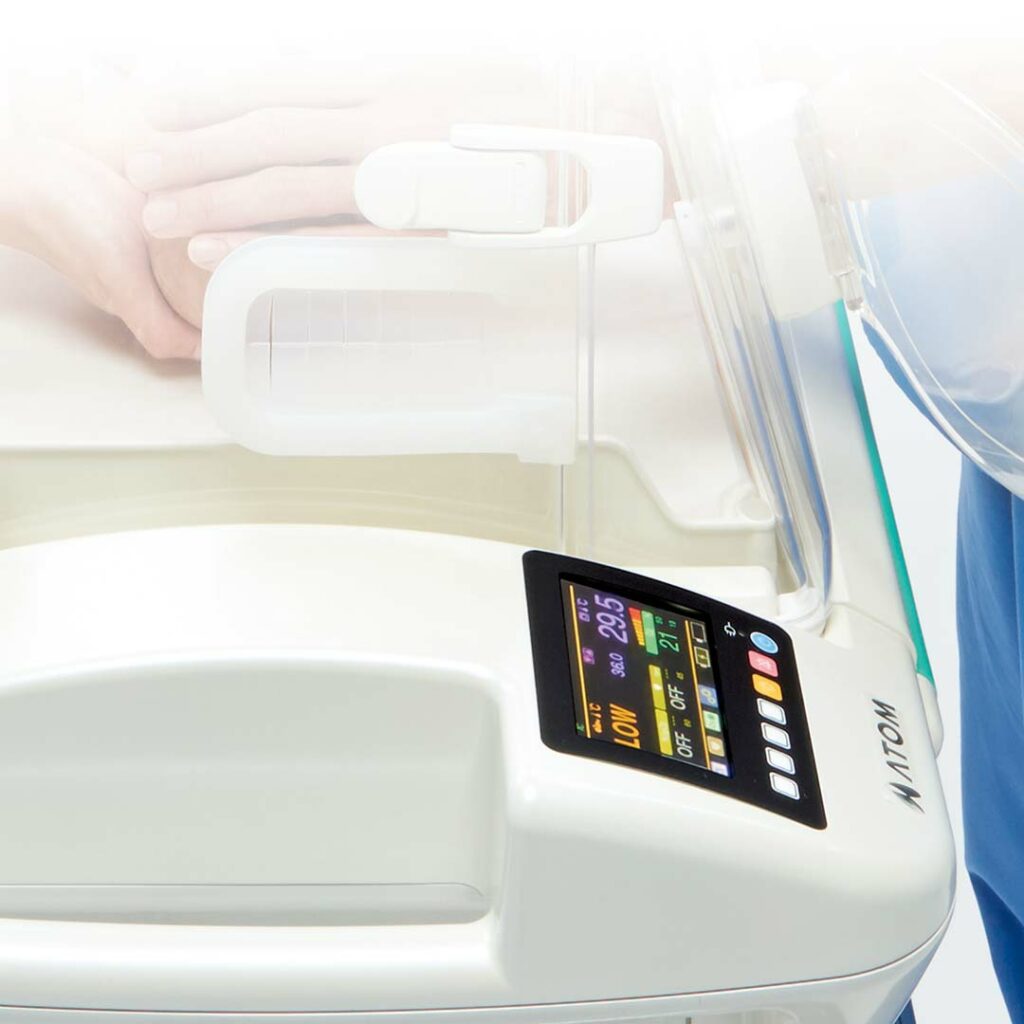
The control panel is positioned at the side of the infant’s head, enabling continuous monitoring of vital signs even during active treatment. This ergonomic placement means that caregivers do not need to move around the incubator or lose visual contact with the patient when adjusting parameters.
Lightweight construction without compromising functionality
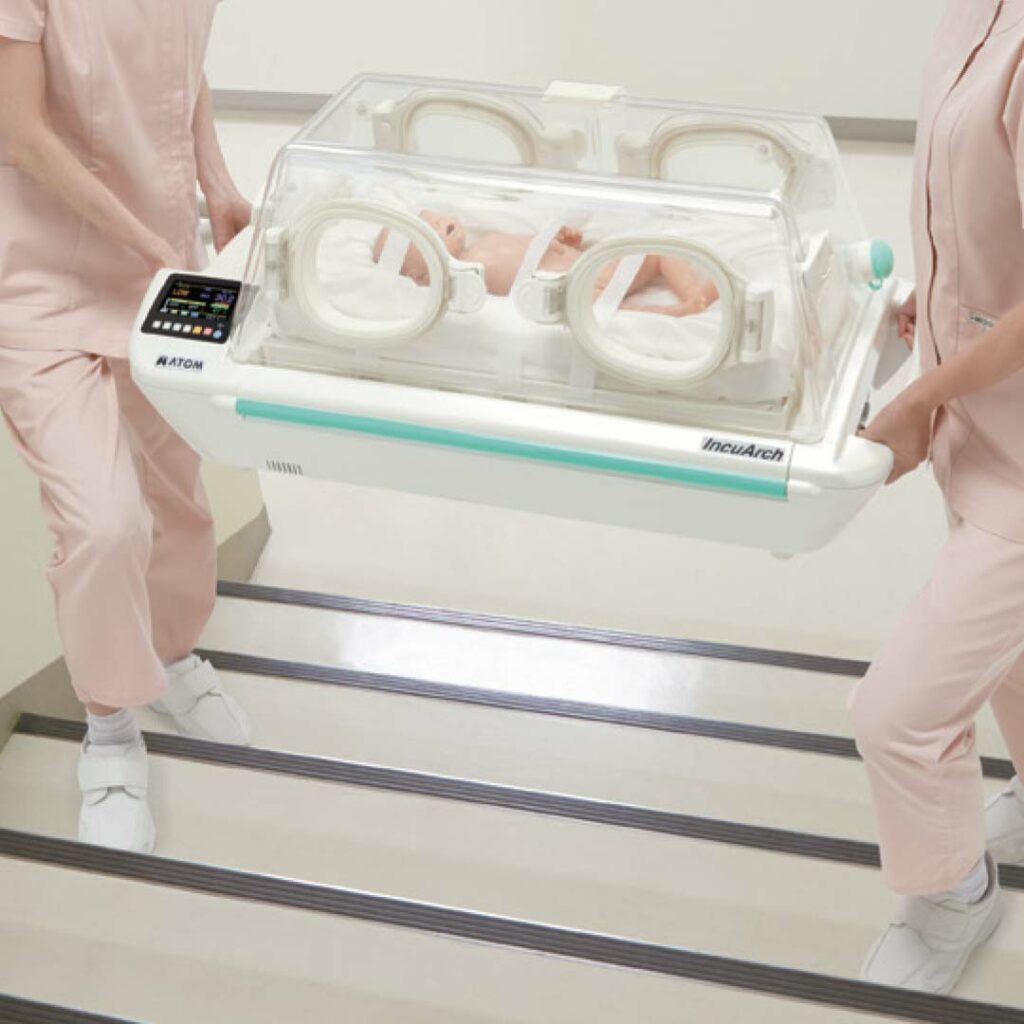
Weighing approximately 25 kg for the main unit, IncuArch represents a significant reduction compared to conventional transport incubators (which may exceed 60 kg). This weight reduction facilitates handling during loading and unloading, reduces physical strain on transport teams, and allows for easier manoeuvring in tight spaces – all while maintaining the same clinical functionality as larger models.
Low centre of gravity and reduced sway
The compact structure and thoughtful weight distribution result in a low centre of gravity, which reduces lateral sway during cornering or turbulence. This stability translates into greater confidence for the transport team, who can focus on clinical care rather than equipment management.
Vibration damping for physiological protection
IncuArch incorporates a cushion rubber structure specifically designed to attenuate vibrations transmitted to the infant during transport.
Extended battery life for long‑distance transfers
The incubator is configured with lithium‑ion battery packs and can sustain up to 360 minutes of continuous operation.
Unobstructed hood surface for hygienic procedures
The reduced surface unevenness of the hood simplifies cleaning and disinfection. The smooth surface allows for thorough wiping between uses, supporting infection prevention protocols.
Integrated monitoring capabilities
The operation panel provides clear display of skin temperature and optional add‑on units, such as SpO₂ monitoring (Masimo or Nellcor) and oxygen concentration measurement.
Compatibility with multiple stand options
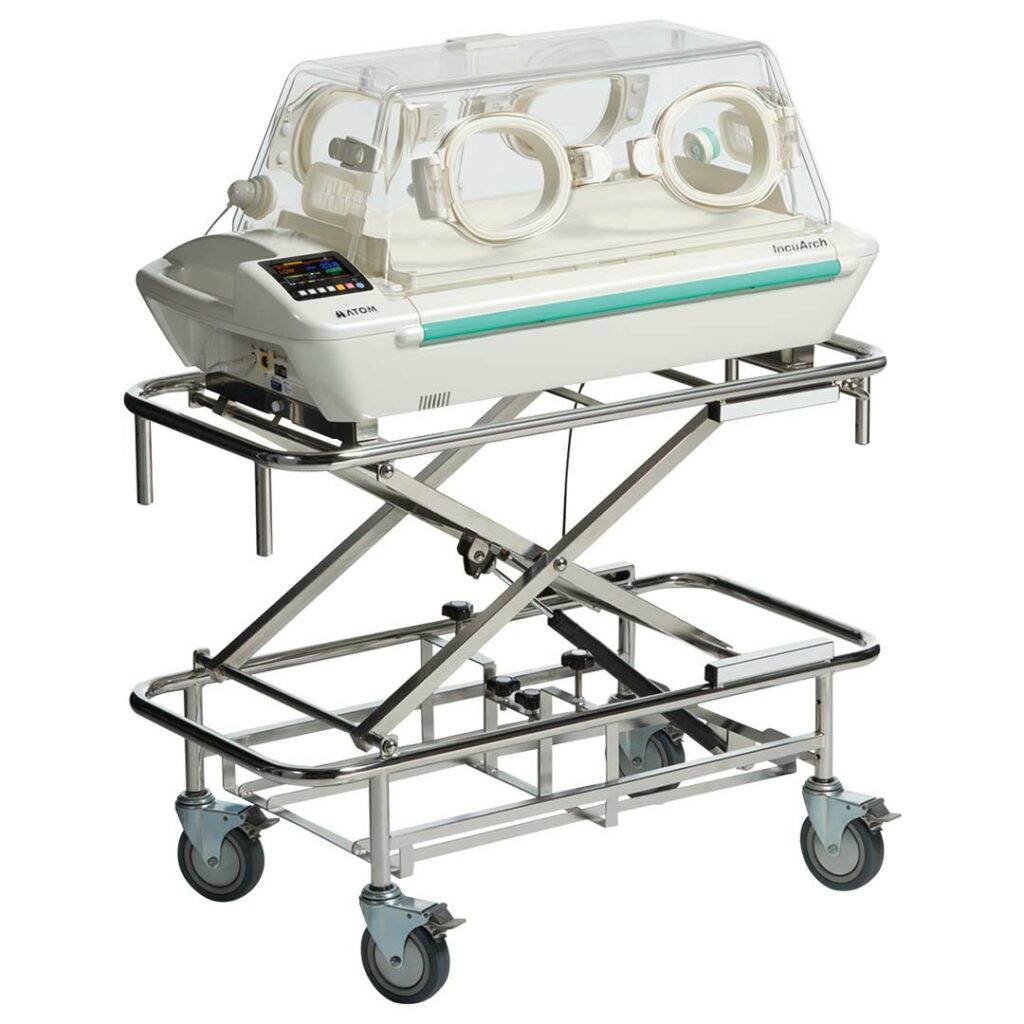
The incubator can be mounted on either an HL stand (height‑adjustable) or a cabinet stand with integrated storage, according to their specific workflow and the clinical requirements of the patient.