A race against cold
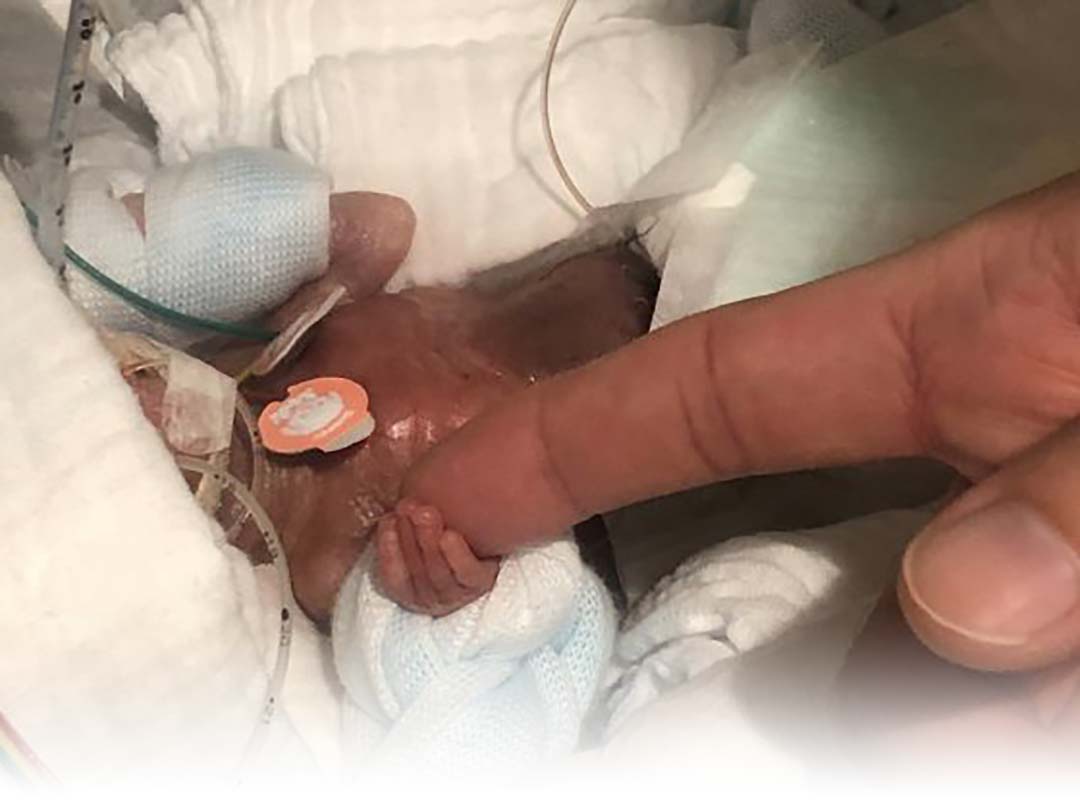
Imagine being born weighing less than a smartphone… less than 300 grams.
Your skin is so thin that it is almost transparent. You do not yet have the fat that helps a fullterm baby stay warm. This is not a rare case. It happens every day in neonatal intensive care units around the world. For these extremely low birth weight infants, the first hours of life are not just delicate, they are a race against cold…
We adults keep our temperature without thinking about it.
If we feel cold, we shiver, we move, we put on a sweater. A preterm baby has none of these tools.
When a baby is born too early, temperature can drop 0.5 to 1.8 degrees per minute after delivery. Heat loss happens nearly four times faster than in an adult, and brown fat – the special tissue that acts like a natural heating system – is very little.
Without that heat, the baby’s body enters cold stress.
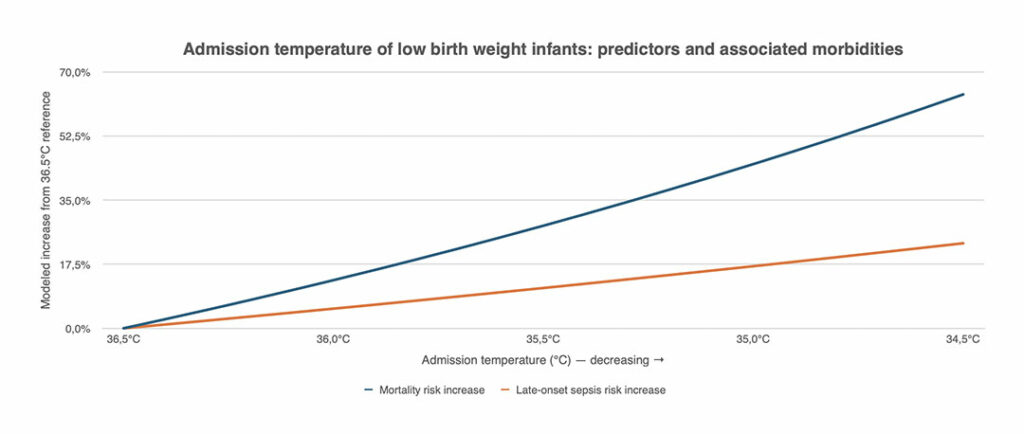
*Pediatrics 2007 Mar;119(3):e643-9. doi: 10.1542/peds.2006-0943. Epub 2007 Feb 12 https://pubmed.ncbi.nlm.nih.gov/17296783/
Clinical studies show a hard fact: for every degree below 36.5°C at admission, the risk of death increases by 28%, and the risk of infection rises by about 11%.
Temperature is the foundation of survival – much more than just a number on a monitor.
In an ideal wellmanaged NICU, the goal is simple but difficult to achieve: keep the baby’s body temperature stable between 36.5 and 37.5°C, without sudden drops, without overheating.
But look at what happens in real life. A baby is born. The delivery room is sometime kept cool for the staff’s comfort. The infant is wet with amniotic fluid. He or she is placed on a scale, touched by cold hands, exposed to cold instruments. Then the baby is moved to an incubator. During these few minutes, the baby can already be losing heat that cannot afford to lose.
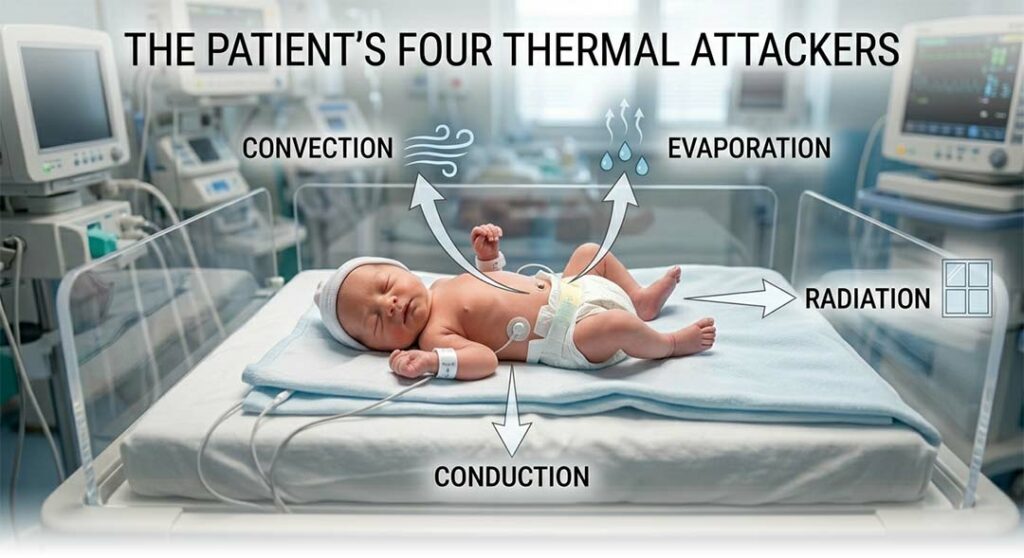
In such a context we must protect the baby from four different ways of losing heat:
- Conduction – losing heat by touching a cold mattress or cold hands.
- Convection – losing heat because cool air moves across the skin.
- Radiation – losing heat to a cold wall or a cold window nearby.
- Evaporation – losing heat because water evaporates from the wet skin.
Each of these is a small enemy, and they attack all at once.
Babies should be kept in an environment where temperature control looks easy, preventing them from losing heat to cold surfaces. At the same time, they need high humidity in order to protect their delicate skin and reduce water loss.
What separates a good incubator from the best is the ability to monitor the baby’s temperature effectively, adjust the heat automatically, and solve problems that nurses should not have to think about. It does not wait for the nurse to notice them, it acts before problems arise. For an Extremely Low Weight Baby (ELWB), they are necessities.
If you are a nurse or a clinician, you do not have time to fight the equipment. You need to focus on the baby, on breathing, on nutrition, on infection control and family support. When an incubator works perfectly the temperature stays stable, the baby stays pink, the parents stay calm, the night shift passes without an alarm. That is the real measure of reliability.
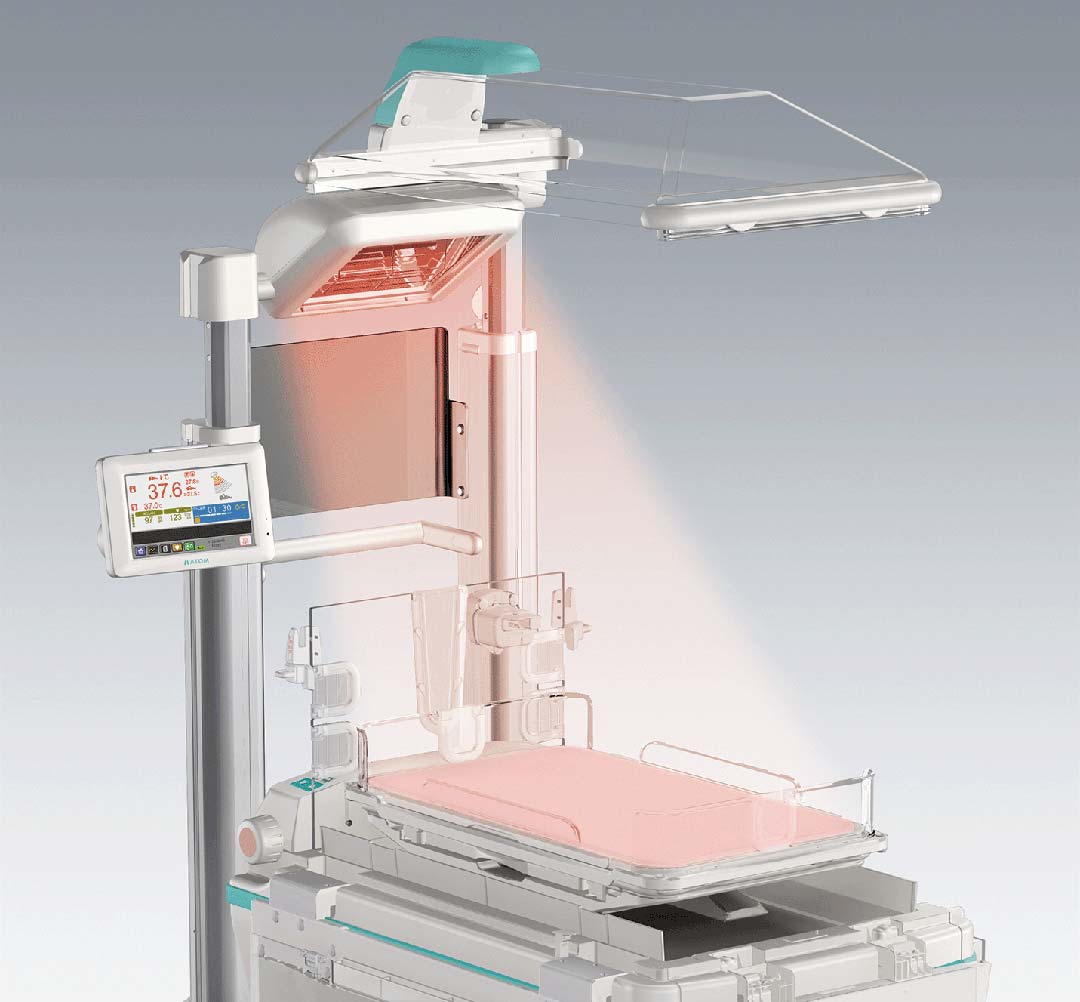
ATOM MEDICAL CORPORATION has spent decades building incubators for the smallest and most fragile patients. The clinical results speak for themselves.
Hospitals that care for sub300gram survivors choose Atom because the technology is designed around the baby’s physiology.
One of the smallest babies ever recorded to survive had a team of doctors and nurses working at the edge of what medicine can do. And beneath that team there is the incubator – working silently, steadily, for both babies and hospital staff.